The index card method


I bought a pack of three hundred index cards last month. I bought them because I had lost another notebook, the third one this year, and I was tired of pretending that any of my systems were really systems. The cards cost me four dollars. I have written on maybe forty of them. The other two hundred sixty are sitting in a stack on my desk, and the stack itself has become a kind of answer.
Here is the thing nobody tells you about the index card method: it is not really a method. It is a constraint. The card is small, the card is cheap, and the card does not forgive you for writing the same thought twice on it because there is no room to. When you sit down to write a card, you have to decide, in advance, before your pen hits the paper, what one idea is going on this card. Not a paragraph. Not a section. One idea. The constraint forces the thinking. That is the whole pitch.
I have been using cards seriously for about six weeks. Before that, I had dabbled for years the way most people dabble: write something on a card, lose the card, convince myself cards were not really for me. The difference this time was that I started treating the cards the way I treat a publish button. Each card is a commitment. Once you write it, you have to make it worth something, because cards are physical and you cannot undo them quietly.
Why the card is the constraint that forces the thinking
Every note-taking system has a unit. Some systems use the page. Some use the document. Some use the folder and expect you to file things later. The index card method uses the card. And the card is so small that the unit of capture and the unit of meaning are forced to be the same thing.
If you are writing on a page, you can always tell yourself you will come back to organize it. You will write a long paragraph about three different ideas, all blurred together, and tell yourself that future-you will sort it out. Future-you never sorts it out. The page becomes a graveyard of half-formed thoughts. You forget that you wrote it. You find it again six months later and have no idea why you cared.
A card does not allow that. You write one quote per card, or one thought, or one question. If you cannot fit it on one side, you do not write it. That is not a limitation, that is the feature. The card is forcing you to do the work of compression upfront, at the moment of capture, when the thought is still alive. By the time you get to the back of the card, you should know what you meant.
This is also why so many people fail at cards. They write long, sprawling notes across multiple cards and then lose them because the cards do not relate to each other. The fix is brutal: if it does not fit on one card, it is not ready to be a card yet. Go think more. Come back when you can compress it.
Five kinds of cards (and why they matter)
Not all cards are the same. Once you have committed to the constraint, the next question is what kind of card you are holding. There are roughly five kinds, and they each serve a different job:
Direct quotation cards. These are the easy ones. You find a passage in a book that lands, you write it down verbatim, you add the page number and the citation. Done. The card is a copy of someone else is thought, and your job is just to be a faithful copyist. The card itself is not where the thinking happens — the thinking happens later, when you use the quotation as raw material for your own argument.
Paraphrase cards. These are harder. You read a passage and you rewrite it in your own words. The act of paraphrasing forces you to actually understand what you just read, because you cannot paraphrase what you do not comprehend. If you find yourself stuck, unable to paraphrase, that is a signal to re-read the original, not to fake your way through. The card is honest in a way the page never is, because you cannot hide behind a long quote.
Question cards. These are the cards you are allowed to be confused on. Write down a real question, not a fake one, not a what-is-the-author-trying-to-say kind of homework question, but an actual question you are stuck on. Why did this argument stop working halfway through chapter three. What does the author mean by grounded. Is this the same idea as the other paper I read, or a different one. The card is a placeholder for future understanding. When you find an answer later, you write the answer on the back of the same card, or on a new card that explicitly references the question card by its topic.
Argument cards. These are yours. You are not quoting anyone. You are not paraphrasing. You are making a claim. I think X because Y. The author is argument in chapter 2 fails when Z. Here is the connection between this paper and that one. These cards are the hardest to write because you have to know what you think. But they are also the most valuable, because they are the only cards that are really yours. Everything else is bookkeeping.
Reference cards. These are the cards you will never read again, and that is fine. Citation, location, maybe a one-line summary. They exist so you can find the source later when you need it. They are the index to the rest of your cards.
How to actually use the stack once you have it
The trap with index cards is that you write a beautiful stack of forty cards and then it sits there. The cards become a monument to your good intentions. The cards need to move. They need to be shuffled, reread, recategorized, sometimes thrown away.
Once a week, I spread my cards out on the desk and read every single one. Not in order. Not by topic. Just read them. The reading takes maybe ten minutes for forty cards. What I am doing is two things at once: I am reminding myself what I have been thinking about, and I am noticing which cards have gone stale, which ones no longer feel relevant, which ones contradict each other, which ones I wrote down because I was supposed to, not because I cared.
The stale cards get thrown out. This is also a feature, not a bug. Most note-taking systems accumulate forever. The card stack does not, because it is physical, and physical things require physical decisions. If you do not pick the card up, it stays where it was. If you pick it up to read it and realize it is no longer relevant, you have to physically move it to the trash. That physical movement is part of how the system works.
After the read-through, I shuffle the cards into rough piles by theme. Not into rigid categories, into rough piles. These five cards are all about the same project. These three are questions I have not answered yet. These two contradict each other. The rough piles tell me what to do next. If I have three question cards on the same theme, that means I have an essay to write. If I have five argument cards on the same project, that means I have a draft. The cards are not the work — they are the inventory of the work.
Why physical beats digital for this specific thing
I use digital tools for everything else. I have a notes app. I have a read-later app. I have a dozen text files of half-written arguments. The card stack is the only thing in my life that I have kept physical for more than a month, and the reason is that the physical constraint is the point.
Digital notes are too forgiving. You can write a thousand words of mush and tell yourself you will edit it later. You can write the same idea in three different documents and forget you did. You can search for a phrase and find it in seven different places and not know which one is the canonical version. The digital note-taking world is a graveyard of duplicated, contradictory, half-finished thoughts, and most of the time the problem is not the tool, it is that the tool has no constraint that forces you to mean what you write.
Cards do. The card is small. The card is one. The card is committed. When you write something on a card, you cannot ctrl-Z. When you lose the card, it is gone. When you want to find it again, you have to remember roughly where you put it. All of these frictions are productive. They force you to write things worth keeping, in places where you can find them, with enough thought that you remember them even when the card itself is missing.
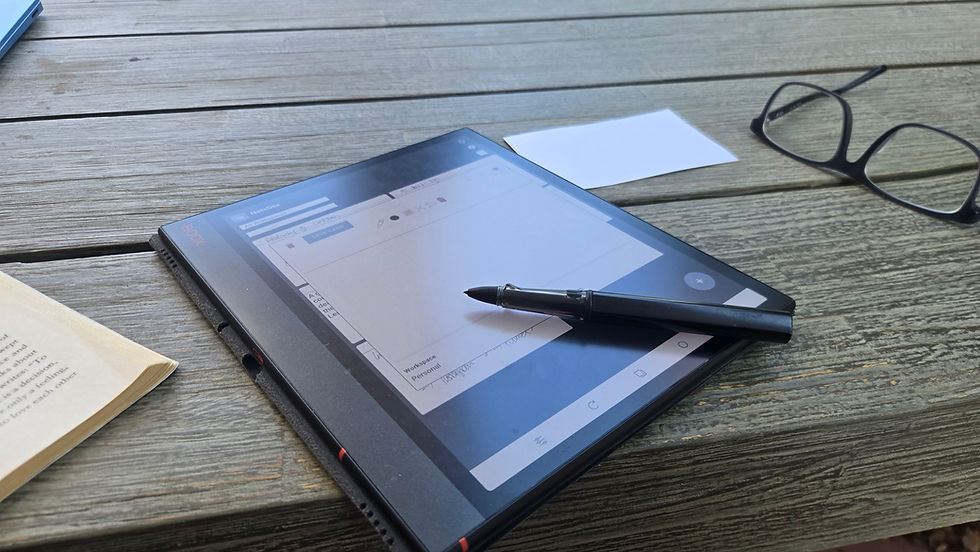
...Unless its NoteDex!
I am not saying digital is bad. I am saying that for the specific job of committing one idea to memory, the index card is the right tool, and the only digital equivalent is the one we created - NoteDex. The closest digital analog is a single markdown file per idea, one file, one thought, no nesting, but in practice only NoteDex actually does this. The temptation to add another paragraph, another bullet, another sub-thought, is too strong.
What to do this week
Buy a pack of cards. The cheap ones. Three hundred for four dollars. Do not buy the nice ones yet — buy the cheap ones, because the cheap ones are a small enough commitment that you will actually use them.
Write five cards. Not forty. Five. One quote, one paraphrase, one question, one argument, one reference. Spread them out on your desk after you write them. Look at them. That stack of five is your first real inventory.
Read the stack once a day for a week. Just pick them up and read them. Do not add anything. Do not organize. Just read. After a week, you will know whether the system is for you.
If it is, keep going. If it is not, you spent four dollars and a week to find out. That is cheaper than another notebook. Then if you like the idea try NoteDex to do it digitally and get the best of both worlds.