How to read research papers fast and effectively

I have eleven research papers open in tabs right now. Eleven. And a voice memo from last Tuesday that I have not opened. The papers are not the problem. The fact that I tried to read all of them like books is the problem.
There is a famous trick from a computer science professor called the three-pass approach. Read the paper three times, each pass with a different goal. It works. But it only works when you stop trying to remember it and start forcing each pass onto a card.
Pass 1 is a five-minute interview
The first pass is the one most people skip. You read the title, the abstract, the section headings, the conclusion, and you skim the references. Five minutes, maybe ten. The point is not to understand the paper. The point is to decide whether this paper is worth your time at all.
Write one sentence on a card: what category of paper is this, what is it about, who is it for. If you cannot fill in those four lines in five minutes, the paper is not for you yet. Move on. The whole job of pass one is to protect you from papers you do not need to read deeply.
Pass 2 is the card that makes you actually understand it
Pass two is where you read the paper for real, but you still do not try to memorize anything. Read the introduction carefully. Read the conclusion carefully. Skim the rest. Look at every figure and ask yourself what story it tells.
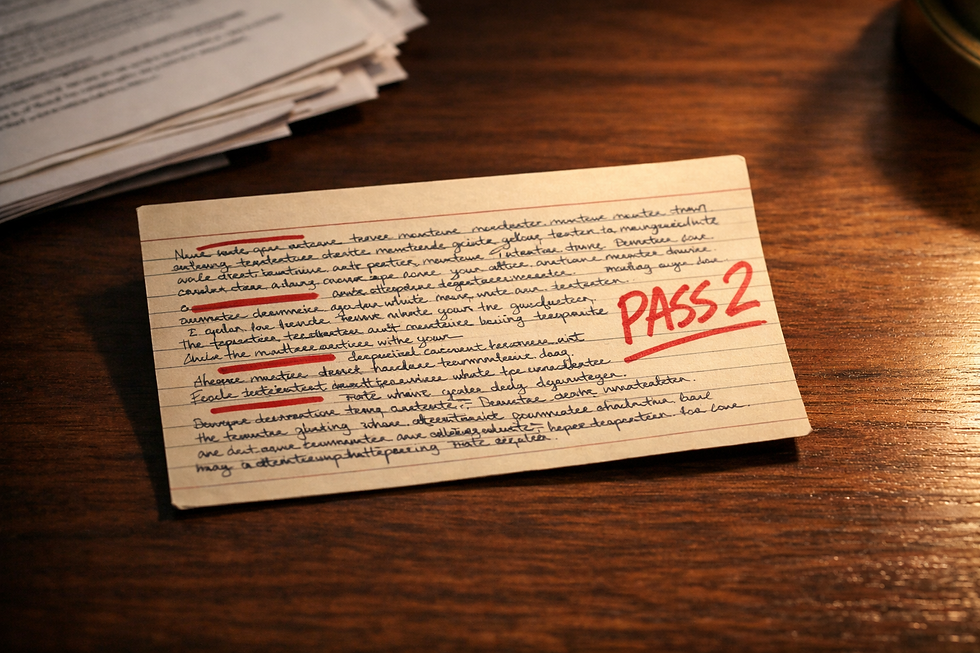
Then write a single index card with the paper reduced to: the question, the method, the headline result, and the one limitation that matters. If you cannot fit it on a card, you have not understood it yet. The card is the test. Not the read.
Pass 3 is where you argue with the paper
Pass three is the deep read. You reimplement the central idea in your own head. You find the assumption the authors quietly relied on and you ask whether it holds. You write the second card, the critique card: what would have to be true for this result to flip, what did the authors not test, who would disagree and why. Most people never do pass three.
That is fine. Most papers do not need pass three. But the papers that do need it are usually the ones that change how you think, and you will only know that if you have done pass one and two first.
Why a folder is not a system
I keep finding people with beautifully organized PDF folders. Color coded. Titled. Sorted by topic. None of them can tell me what the paper said last week. A folder is not a system. A folder is where files go to die.
The system is the card. One paper, two cards. Pass two card on the front. Pass three card on the back. The folder is decoration. The card is the constraint that forces you to decide what mattered.
Three papers, six cards, one week
Here is what to do this week. Pick three papers you have been meaning to read. Do pass one on all three in one sitting. Pick one. Do pass two and write the card. Do pass three on that one paper and write the critique card. Six cards total. One folder. One week. By next Friday you will know more about those three papers than you learned from every PDF you highlighted last month. The trick was never speed. The trick was always forcing the paper onto something small enough that you had to choose what survived.
What to do this week
Pull up the three papers you keep reopening and closing. Read each title and abstract. Pick the one that matters. Read it twice with intention. Write two cards. Keep them in a stack on your desk, not in a folder on your desktop. The folder is for archiving. The cards are for thinking. If you want a place where each card forces one paper into one decision, NoteDex does exactly that. Six cards by Friday and you will never read a paper the same way again.